
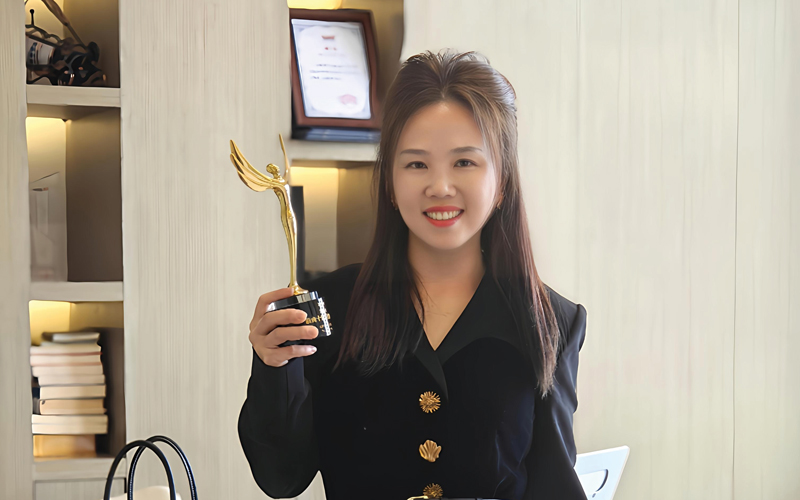
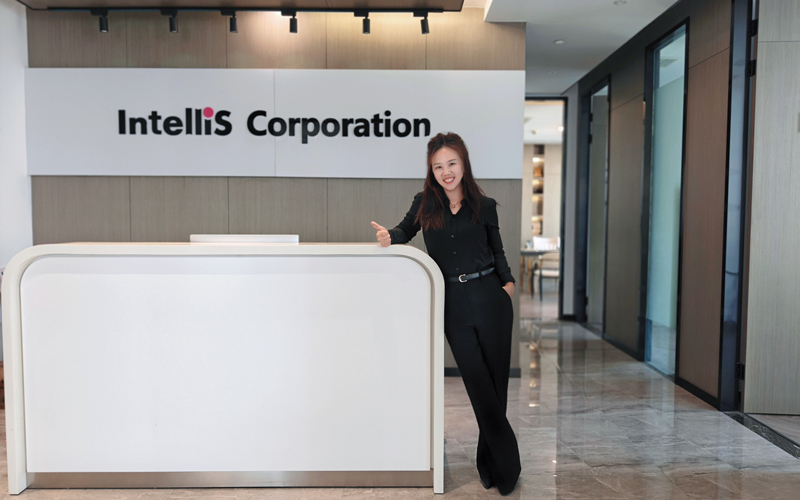
Sabrina Cheng, Founder & CEO of IntelliS Corporation and EIC Global Ambassador, was featured in the Spring 2025 issue of EIC Energy Focus magazine's prestigious "View from the Top" series. In this exclusive cover interview, she discusses IntelliS's journey from a Shanghai startup to a multi-national talent solutions provider, China's role in the global energy transition, and the challenges and opportunities for international businesses in the region.
Read Original on EIC Energy Focus →IntelliS Corporation provides specialised technical talent solutions and related services in the energy sector. With 10 offices across Asia-Pacific, we leverage our artificial intelligence (AI) and digital management platform to offer compliant, cost-effective and efficient workforce solutions.
Founded in 2009 by myself and two Dutch engineers, IntelliS began as a collaboration between international expertise and local market insight. After my partners relocated, I took full responsibility as CEO.
Success in this industry hinges on reputation and professionalism. I have always prioritised professionalism and long-term development, understanding that true success goes beyond profitability. Strengthening the company's technical expertise through innovation and technology while building a strong industry reputation has always been at the core of my business philosophy.
We began our international expansion in 2018 by establishing IntelliS in Singapore. While our operations were primarily in China, 90% of our clients were global enterprises, providing a strong foundation for growth abroad.
Expanding internationally brought new challenges, requiring higher standards in management, operations, legal compliance, finance and team capabilities.
In 2019, the COVID-19 pandemic disrupted global markets, posing significant challenges. One of our partners in Singapore left for family reasons, slowing our progress. Shifting international dynamics created further obstacles. Adapting to cultural differences and new legal environments while building trust in different regions requires time and continuous learning.
China's energy policy is distinct, balancing economic growth, energy security and low-carbon transformation, shaped by its political system, development stage and global positioning.
Rich in resources, the US follows an 'energy independence' strategy, with priorities varying between administrations. Germany has shifted from coal, oil and nuclear to green energy through policies such as the Renewable Energy Law. France, once reliant on nuclear power, now pursues renewable energy under the National Action Plan for Renewable Energy.
China, historically coal-dependent, has implemented major policies including the Strategy for Energy Production and Consumption Revolution (2016–2030), setting medium and long-term goals for a clean, low-carbon, safe and efficient energy system.
The likelihood is low. While major economies such as China, the EU and the US have set net-zero targets for 2050 or beyond, some countries have even later timelines, and others have yet to establish clear goals.
Reaching net zero will require a fundamental shift in global energy production, transportation and consumption patterns. This transition will demand significant investment, technological innovation and strong policy support.
The International Energy Agency (IEA) has said that achieving net zero will require a phased approach and the effective implementation of global climate policies. While renewable energy and electrification are crucial to reduce emissions, current adoption rates are insufficient.
"China's continued investment and innovation are not only boosting its own green development, but also having a positive effect on global climate change efforts."
China is actively promoting advanced energy solutions such as energy storage and clean hydrogen. It also leads in the fields of advanced nuclear energy, sustainable aviation fuel, and carbon capture, utilisation and storage.
In 2023, China's investment in clean energy technologies exceeded the combined total of the other top 10 investing countries. More than 60% of this was directed towards renewables and transport electrification, with the rest focusing on power grids, energy storage, nuclear technologies and hard-to-abate sectors.
Beyond domestic deployment, China has become a significant global supplier of clean energy technologies. The IEA predicts that by 2035, China's clean technology exports will exceed US$340bn, rivalling oil export revenues from Saudi Arabia and the UAE.
China's supply chain and technological capabilities in oil and gas, offshore engineering, new energy, and petrochemicals have rapidly improved in recent years, but we continue to face challenges in attracting specialised and technical professionals.
To address this, we focus on talent development, having established a strong talent pool to ensure our ongoing success. We actively recruit and cultivate outstanding talent, enabling us to strengthen workforces and drive business expansion and technological innovation.
The Middle East plays a significant role in the global economy due to its abundant oil and gas resources. As the head of IntelliS, I recognise the immense potential this region offers, making it a strategic priority for us, especially in energy projects and technical talent development.
Chinese manufacturing capability is renowned for its efficiency, high quality and cost-effectiveness, supported by a complete industrial chain and a robust supply chain system. The combination of the Middle East's energy resources and China's manufacturing strength, along with solid bilateral relations, provides us with a distinct competitive edge in executing energy projects in the region.
As a member company and global ambassador for EIC, I deeply value the association's esteemed reputation in the energy industry. EIC's professional capabilities and industry influence are pivotal in helping companies build a strong reputation and enhance integration across the energy value chain.
EIC's powerful industry research capabilities, data analysis tools and consulting services are invaluable for gaining insights into market trends and potential market opportunities and risks, helping businesses to make informed decisions.
Furthermore, EIC fosters collaboration across the energy ecosystem by facilitating connections between upstream and downstream industrial chains. Its platforms promote knowledge-sharing and resource exchange, enhancing operational efficiency and reducing business risks.
My journey is just beginning; I am still growing and learning. For women in energy, my advice is to prioritise maintaining a positive mindset and a healthy body. Equally important is ensuring the happiness of your family — work-life balance plays a significant role in sustaining both personal and professional growth. By nurturing yourself and your loved ones, you are better equipped to navigate the demands of a dynamic and competitive industry.
About Sabrina Cheng
Sabrina Cheng is the Founder and CEO of IntelliS Corporation, with 15 years' experience in corporate operations and strategic planning. Named EIC Global Ambassador in 2024, she has earned multiple business awards. She holds a Master's degree in Economics from Zhejiang University of Finance and Economics and is active in Rotary International.
Partner with IntelliS Global
AI-powered offshore talent solutions across Asia-Pacific and the Middle East.
Contact Us